The Wager: Review and Activities
2026-09-02
Preliminaries
Agenda
Reminders
- I have your paragraphs from last week if you haven’t picked them up yet (no comments)
- For today, we continue to discuss Chapter 2, “Why You Should Bet on God”
- No class on Monday (Labor Day)
- For next Wednesday, the reading is Chapter 3, “What Makes You You?”
Review
Agenda
Expected Utility
The Expected Utility of an outcome is the value of that outcome multiplied by its probability:
- If a raffle gives you a 1% chance of winning $100, the expected utility of playing is $100 \(\times\) 0.01 = $1.
- If you pay $1 for a ticket:
- 99 out of 100 times you will be out $1.
- But 1 out 100 times you will be up $99.
Mega Millions

The current cash jackpot for the “Mega Millions” lottery is $68.9 million and the odds of winning are 1 in 290,472,336. A ticket costs $5. Is that a good deal?
Mega Millions
The probability of winning is:
\[\frac{1}{290,472,336} = 0.00000000344265\]
So the expected utility is about 24¢:
\[68,900,000 \times 0.00000000344265 \approx .237\]
Paying $5 for an expected utility of 24¢ is a bad deal.
Mega Millions
To break even on a $5 ticket, the jackpot needs to be about $1.45 billion:
\[1,452,369,541 \times 0.00000000344265 \approx 5.00\]
(This ignores taxes, the chance of splitting the jackpot with other winners, the chance of winning smaller prizes, and the diminishing marginal utility of money.)
Decision Matrices
You should choose the action that maximizes your expected utility. To figure out what action this is, you need to consider:
- each action available to you,
- and, for each action, each possible outcome of that action,
- and, for each outcome, its expected utility (that is, its value times its probability)
Plea Bargain or Trial?
| win 50% |
lose 50% |
Expected Utility | |
|---|---|---|---|
| fight it | 0 years | -15 years | ? |
| take the plea | -5 years | -5 years | ? |
You have been arrested and charged with a crime that carries a 15 year sentence. You can take a plea deal and get that reduced to 5 years, or you can fight it in court. Your lawyer tells you your chances in court are a toss up. Calculate the expected utilities. What should you do?
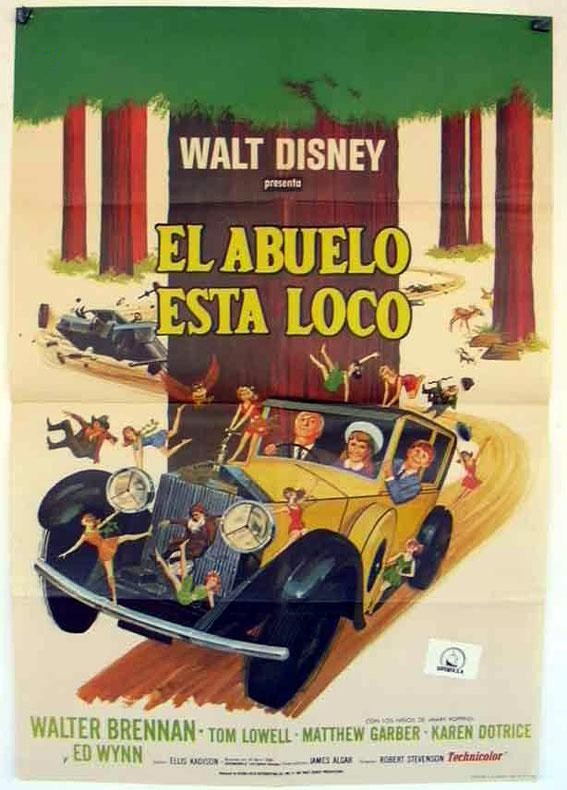
El Abuelo Esta Loco
You want to watch the 1967 live-action film The Gnome-Mobile. You can stream it for $4. Or you can download a pirated copy. There is a one in a million chance you will get caught, and you live in a country with draconian anti-piracy laws, so if you do get caught, you will be fined $100,000.
Create a decision matrix and calculate the expected utility of each possible action. What should you do?
The Argument for Betting on God
| God (\(p_1\)) | No God (\(p_2\)) | Expected Utility | |
|---|---|---|---|
| Believe | \(\infty\) | \(f_1\) | \(\infty\) |
| Don’t | \(f_2\) | \(f_3\) | \(f_4\) |
Argument
- BG1. One should always choose the option with the greatest expected utility.
- BG2. Believing in God has a greater expected utility than not believing in God.
- BG3. So you should believe in God.
Believing in God
| God (\(p_1\)) | No God (\(p_2\)) | Expected Utility | |
|---|---|---|---|
| Believe | \(\infty\) | \(f_1\) | \(\infty\) |
| Don’t | \(f_2\) | \(f_3\) | \(f_4\) |
Objections:
- Infinite good doesn’t make sense.
- The probabilities are unknowable.
- Believing in God isn’t enough to get heaven.
- The rewards of heaven could finite.
- There are many Gods.
- Belief isn’t voluntary.
Infinite Goods?
- If your capacity to enjoy goods is finite, then receiving more goods than can possibly enjoy is not better for you.
- For many goods, the more goods of that type you enjoy, the less value each one has.
A yacht would make me happier. A second would also increase my happiness, but by a bit less.
Let \(y\) be the boost from the first yacht, and suppose each additional yacht boosts my happiness by half as much as the one before:
\[y + \frac{y}{2} + \frac{y}{4} + \frac{y}{8} + \frac{y}{16} ... = 2y\]
The benefit of infinitely many yachts is not \(\infty\), but just \(2y\).
Unknowable Odds
| God (\(p_1\)) | No God (\(p_2\)) | Expected Utility | |
|---|---|---|---|
| Believe | \(\infty\) | \(f_1\) | \(\infty\) |
| Don’t | \(f_2\) | \(f_3\) | \(f_4\) |
How do we assign probabilities \(p_1\) and \(p_2\)?
Other Conditions
| God (\(p_1\)) | No God (\(p_2\)) | Expected Utility | |
|---|---|---|---|
| Believe and Pray | \(\infty\) | \(f_1\) | \(\infty\) |
| Believe and Don’t Pray | \(f_2\) | \(f_3\) | \(f_4\) |
| Don’t Believe or Pray | \(f_5\) | \(f_6\) | \(f_7\) |
Stingy God
| Generous God 25% |
Stingy God 25% |
No God 50% |
Expected Utility | |
|---|---|---|---|---|
| Believe | \(\infty\) | \(f_1\) | \(f_2\) | \(\infty\) |
| Don’t Believe | \(f_3\) | \(f_4\) | \(f_5\) | \(f_6\) |
Many Gods
| God1 20% |
God2 20% |
God3 20% |
No God 40% |
Expected Utility | |
|---|---|---|---|---|---|
| Believe in God1 | \(\infty\) | \(f_1\) | \(f_2\) | \(f_3\) | \(\infty\) |
| Believe in God2 | \(f_4\) | \(\infty\) | \(f_5\) | \(f_6\) | \(\infty\) |
| Believe in God3 | \(f_7\) | \(f_8\) | \(\infty\) | \(f_9\) | \(\infty\) |
| Don’t Believe | \(f_{10}\) | \(f_{11}\) | \(f_{12}\) | \(f_{13}\) | \(f_{14}\) |
Believing isn’t Voluntary
The book argues that, even though belief isn’t voluntary, you can still adopt the strategy of trying to get yourself to believe: go to church, avoid spending time with atheists, pray, read religious texts, etc.
Of course, if you try, there is a chance you will succeed and a chance you will fail:
| God exists and you succeed 25% |
God exists and you fail 25% |
God doesn’t exist 50% |
Expected Utility | |
|---|---|---|---|---|
| Try to Believe | \(\infty\) | \(f_1\) | \(f_2\) | \(\infty\) |
What is the expected utility if you don’t try?
Writing Activity
Agenda
Prompt
This is not an essay. This is a thinking-through-writing exercise. I want you to write about whatever it is that you find most puzzling or confusing about the Argument for Betting on God. Try to put your puzzlement or confusion into words, as if you were explaining it to a classmate. If there is something you are struggling to understand, think about what it might mean or how it might work, and explain those different possibilities, and think about which, if any, seems promising.
Gather Your Thoughts
Think about whatever it is that you find most puzzling or confusing about the argument. What do you find puzzling or confusing about it? Are there ways you might try to understand it? What are those? Why are they not quite working out?
Share Your Thoughts
Turn to someone, and share your thoughts.
Writing
This is not an essay. This is a thinking-through-writing exercise. I want you to write about whatever it is that you find most puzzling or confusing about the argument. Try to put your puzzlement or confusion into words, as if you were explaining it to a classmate. If there is something you are struggling to understand, think about what it might mean or how it might work, and explain those different possibilities, and think about which, if any, seems promising.
Sharing
Swap papers with someone. Read each other’s papers, then discuss.