Personal Identity
2026-09-09
Preliminaries
Agenda
Reminders
- For today, the reading was Chapter 3, “What Makes You You?”
- Because of Labor Day, we are shifted: today is the day that I will mostly lecture; next Monday will be more activity based.
- Next Wednesday, Sep 16th, is our first midterm.
“Identity”
Agenda
An Ambiguity
The word ‘same’ is used to express identity. But it is ambiguous, and so is the word ‘identical’.1
- “We wore the same sweater to the party.”
- “Your sweater is identical to mine.”
What are the two possible meanings of ‘same’ or ‘identical’ here?
“the same sweater”
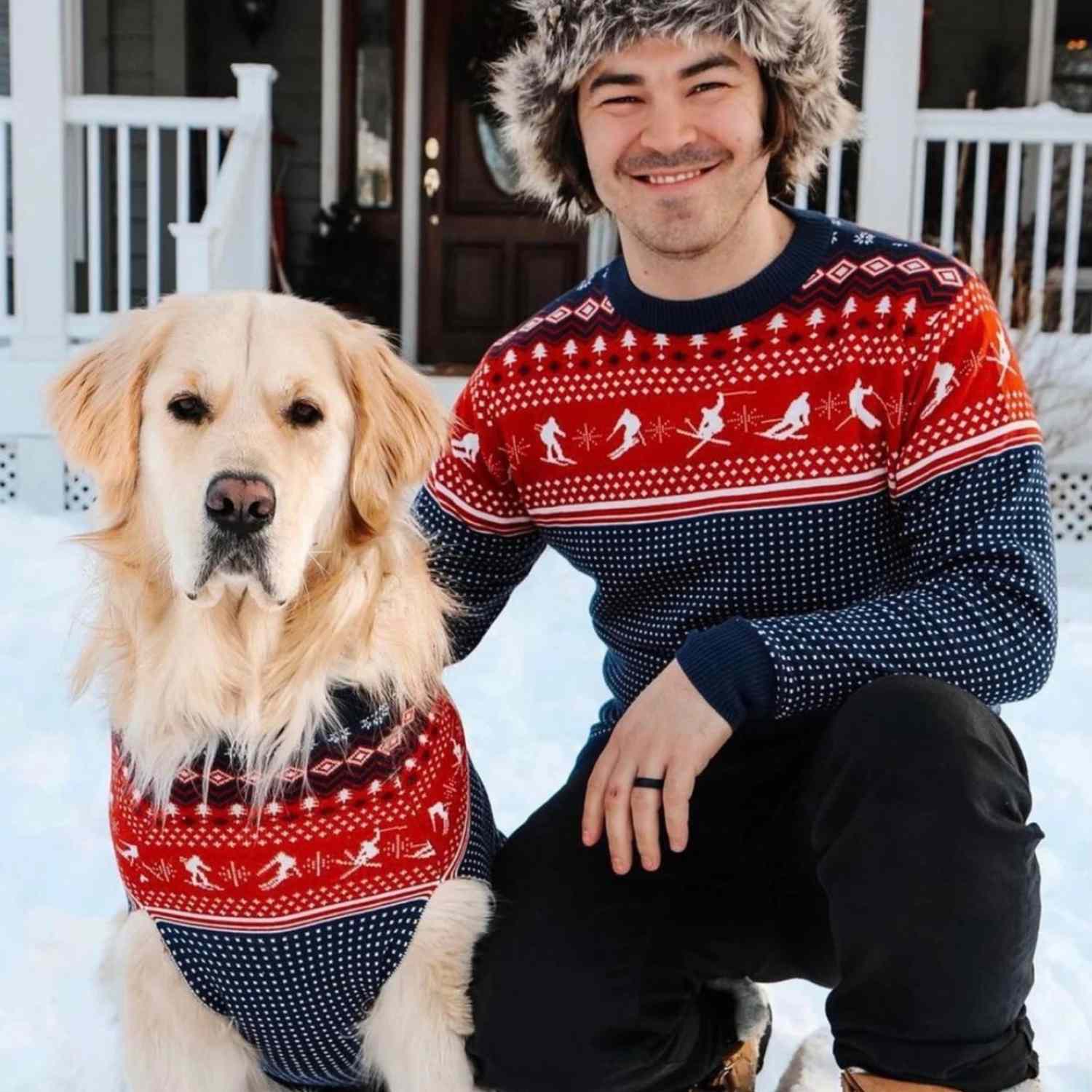
qualitative sameness
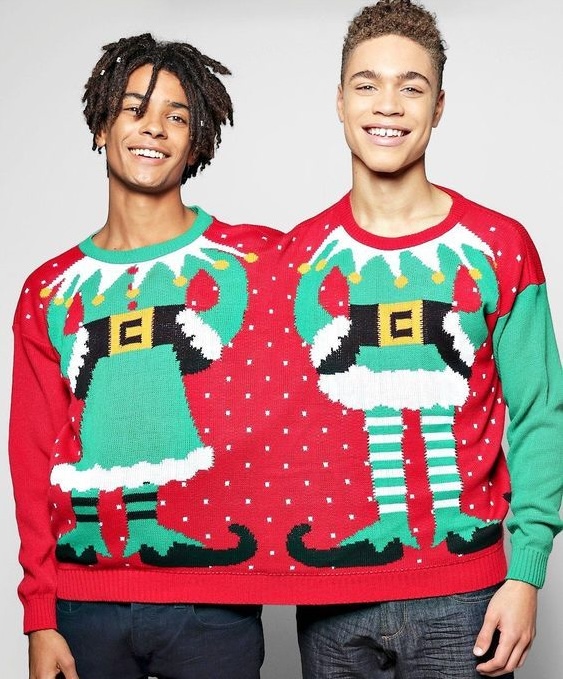
numerical sameness
Numerical Identity
- This is a relation between a thing and itself, never between a thing and something else.
- When we say that \(a\) is numerically identical to \(b\), we are using two different labels for one thing.
- When we say that Superman is numerically identical to Clark Kent, we are using two different names for one thing.
- A difference in labels or names does not imply a different in objects: one object can have more than one label or name.
Qualitative Identity
- This is a relation that can hold between a thing and itself, but can also hold between a thing and something else.
- When we say that \(a\) is qualitatively identical to \(b\), we are saying that they are very similar to each other.
Numerical or Qualitative?
- Hannah Montana is identical to Miley Stewart.
- Every box of cheerios is the same as every other.
- Samuel Clemens is identical to Mark Twain.
- Everyone you date is the same—stop dating losers!
- Darth Vader is Luke’s father.
- Snoop Dogg is the same as Snoop Lion.
Identity Over Time
Agenda
Identity over Time
The puzzles we are going to be thinking about all have to do with numerical identity over time. What makes the kid in the photo on the left the same person as the adult in the photo on the right?


Change and Identity over Time
You might think: “Wait a minute! I’m not the same as that kid in the photo. We’re different in all sorts of ways. In fact, I’m changing every second, so I’m not even the same from one moment to the next. I’m not even the same person as the person who started this sentence!”
- Confused: You and the kid are the same but different.
- Clear: You and the kid are numerically the same, but qualitatively different.
- That’s what change is: numerical identity despite qualitative difference over time.
Necessary and Sufficient Conditions
Agenda
Template of an Account
We are looking for a way to fill in the blank in the following template:
- \(A\) at time \(t\) is the same person as \(B\) at time \(t^*\) if and only if
- proposed condition .
That is, we are looking for a condition that is both necessary and sufficient for being the same person at two different times.
‘if and only if’
‘if and only if’
This is a logical phrase that is often used when given definitions, or when attempting to analyze something. For example:
- \(S\) is a rectangle if and only if
- \(S\) is a four-sided polygon with equal interior angles.
The condition that occurs on the right-hand side of ‘if and only if’ is a necessary and sufficient condition for being a rectangle.
‘if’ and ‘only if’
- Sufficient Condition
- \(S\) is a rectangle if \(S\) is a four-sided polygon with equal interior angles.
- Necessary Condition
- \(S\) is a rectangle only if \(S\) is a four-sided polygon with equal interior angles.
The first says that being a four-sided polygon with equal interior angles is enough to make \(S\) a rectangle.
The second says that it is required for \(S\) to be a rectangle.
Sufficient Conditions
Here is an example of a sufficient condition for being a rectangle that is not a necessary condition:
- \(S\) is a rectangle if \(S\) is a square.
To be a rectangle, being a square is enough, but not required.
rectangles
squares
Sufficient Conditions
- \(S\) is a rectangle if \(S\) is a square.
rectangles
squares
Necessary Conditions
Here is an example of a necessary condition that is not sufficient:
- \(S\) is a rectangle only if \(S\) is a four-sided polygon.
Being four-sided is required, but not enough.
rectangles
four-sided polygons
Necessary Conditions
- \(S\) is a rectangle only if \(S\) is a four-sided polygon.
four-sided polygons
rectangles
Necessary and Sufficient Conditions
- \(S\) is a rectangle if and only if
- \(S\) is a four-sided polygon with equal interior angles.
Finally, a feature that is both required and enough.
rectangles
four-sided polygons with equal interior angles
Necessary and Sufficient Conditions
- \(S\) is a rectangle if and only if
- \(S\) is a four-sided polygon with equal interior angles.
four-sided polygons with equal interior angles
rectangles
Template of an Account
- \(A\) at time \(t\) is the same person as \(B\) at time \(t^*\) if and only if
- proposed condition
Can we come up with a condition that is both required and enough?
same person
proposed condition
Template of an Account
- \(A\) at time \(t\) is the same person as \(B\) at time \(t^*\) if and only if
- proposed condition
proposed condition
same person
Physical Accounts
Agenda
The Fingerprints Account
- \(A\) at time \(t\) is the same person as \(B\) at time \(t^*\) if and only if
- \(A\) and \(B\) have indistinguishable fingerprints.
Objections?
- The same person could have different fingerprints at different times. So this is not a necessary condition.
- Two distinct people could have the same fingerprints. So this is not sufficient either.
The DNA Account
- \(A\) at \(t\) is the same person as \(B\) at \(t^*\) if and only if
- \(A\) and \(B\) have indistinguishable DNA.
Objections?
- Identical twins have indistinguishable DNA. So not a sufficient condition.
- Gene therapy can be used to edit and alter your DNA. So not a necessary condition.
The Same Body Account
- \(A\) at \(t\) is the same person as \(B\) at \(t^*\) if and only if
- \(A\) has the same body as \(B\).
- This avoids the obvious objections of the sort we saw for the Fingerprints and DNA accounts.
- Note that it raises the further question: when is a body at \(t\) the same body as a body at \(t^*\)?
Psychological Accounts
Agenda
Physical Features and Psychological Features
Physical accounts of identity focus on physical features:
- fingerprints, DNA, body parts…
Psychological accounts instead focus on psychological features:
- personality, likes and dislikes, beliefs, emotions, current perceptual experiences, memories, expectations…
The Psychological Matching Account
- \(A\) at \(t\) is the same person as \(B\) at \(t^*\) if and only if
- \(A\)’s psychological features are exactly the same as \(B\)’s psychological features.
Objections?
- The same person can have different psychological features—memories, perceptual experiences, emotions, beliefs—from moment to moment. So not a necessary condition.
- Do you think it is sufficient?
The Psychological Overlap Account
- \(A\) at \(t\) is the same person as \(B\) at \(t^*\) if and only if
- \(A\)’s psychological features are mostly the same as \(B\)’s psychological features.
Imagine each circle contains all the memories, perceptual experiences, emotions, etc., of \(A\) at \(t\) and \(B\) at \(t^*\). The account says that they are the same person when they share most of these features:
\(A\) at \(t\)
\(B\) at \(t^*\)
Objections?
- Your psychological features have changes a lot since you were a little kid. So not a necessary condition.
- Is it a sufficient condition?
The Psychological Descendant Account
- \(A\) at \(t\) is the same person as \(B\) at \(t^*\) if and only if
- \(A\) is either a psychological ancestor or a psychological descendant of \(B\).
\(A\) at \(t\)
\(B\) at \(t^*\)
The Psychological Descendant Account
- \(A\) at \(t\) is the same person as \(B\) at \(t^*\) if and only if
- \(A\) is either a psychological ancestor or a psychological descendant of \(B\).
\(A\) at \(t\)
\(P_1\) at \(t_1\)
\(P_2\) at \(t_2\)
\(P_3\) at \(t_3\)
\(P_4\) at \(t_4\)
\(B\) at \(t^*\)
Against the Same Body Account
Agenda
Conjoined Twins
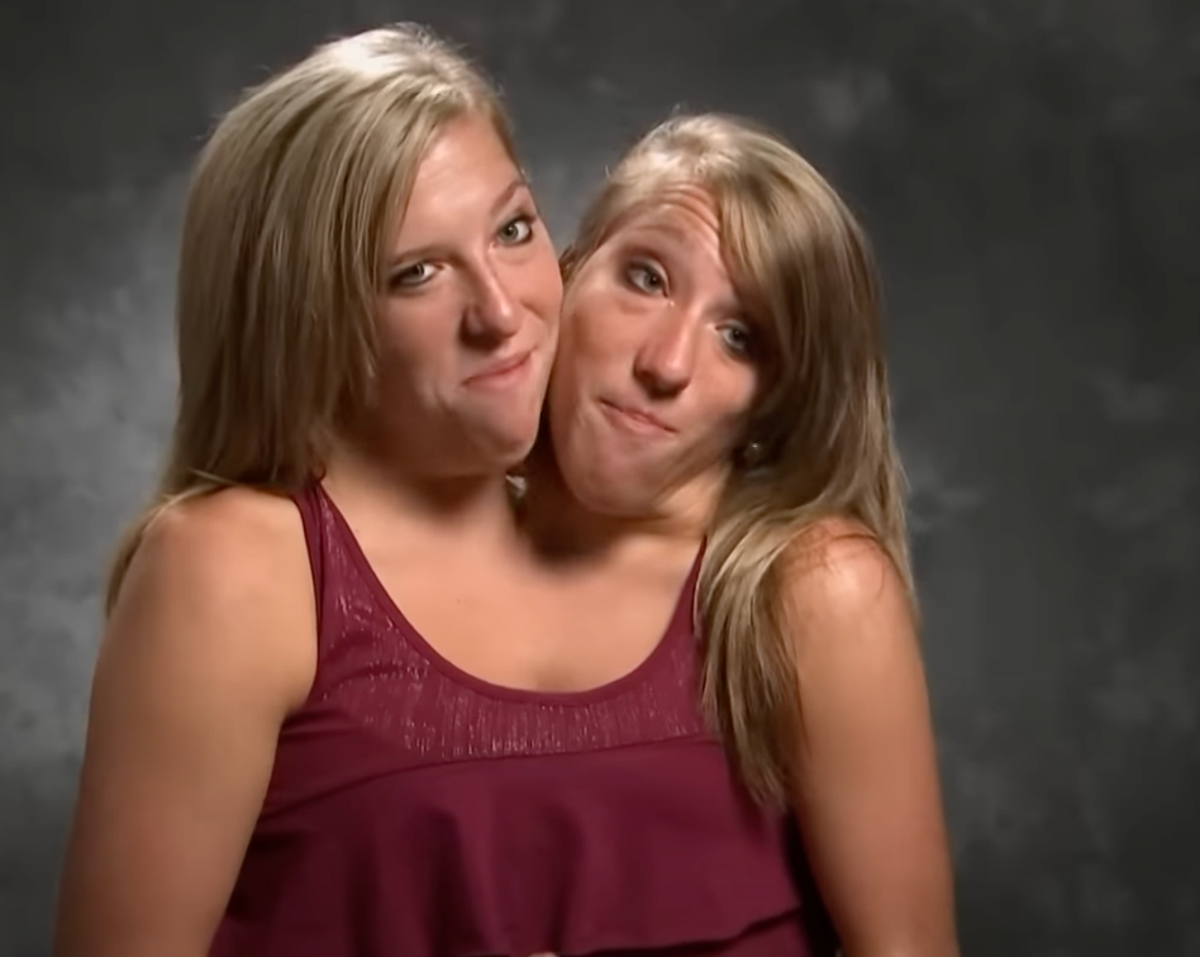
Abby and Brittany Hensel
Conjoined Twins
The Conjoined Twins Argument
- CT1. If the Same Body Account is true, then either Abby and Brittany have different bodies or Abby and Brittany are the same person.
- CT2. Abby and Brittany have the same body.
- CT3. Abby and Brittany are not the same person.
- CT4. So, the Same Body Account is false.
Conjoined Twins
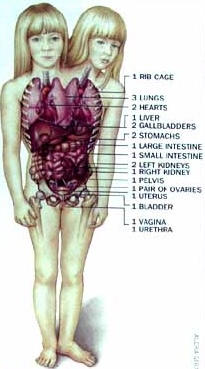
Anatomy of the Abby and Brittany’s Body
Two Bodies?
- Abby’s body
- the right arm, right leg, right lung, the right head and so on.
- Brittany’s body
- the left arm, left leg, left lung, left head, and so on.
Objection:
- On this way of dividing things, Brittany has no liver (the one liver is on the right side).
- But that is wrong: Brittany has a liver, which she shares with Abby.
One Person?
CONJOINED DRAMA
Abby is dating Arie. Brittany is secretly in love with Arie and has always been jealous of their relationship. One night, while Abby is sleeping, Brittany confesses her feelings to Arie, and Arie kisses her. Later, when Abby finds out, she strangles Brittany.
Argument
- If Abby and Brittany are one person, then no cheating occurred, and Abby didn’t kill anyone, she just removed one of her two heads.
- Cheating did occur, and Abby did kill someone.
- So Abby and Brittany are not one person, but two.
Body Swaps
Freaky Friday
On Friday morning, something happens. The person in Anna’s body looks in the mirror in disbelief. “Why,” she thinks to herself, “am I in my teenage daughter’s body?” Meanwhile, the person in Tess’s body looks in the mirror in horror. “Why,” she thinks to herself, “am I in my mom’s middle-aged body?” Predictable hijinks ensue.
There are different ways to fill in how this happened. It could be magic. It could be the result of a “neural state” off-loading and up-loading device. It could be the result of a literal brain transplant.
Body Swaps
- Call the person in the mom body on Thursday, before the freaky thing happens, \(A\).
- Call the person in the mom body on Friday, after the freaky thing happens, \(B\).
The Body Swap Argument
- BS1. \(A\) on Thursday has the same body as \(B\) on Friday.
- BS2. If \(A\) on Thursday has the same body as \(B\) on Friday and the Same Body Account is true, then \(A\) is the same person as \(B\).
- BS3. \(A\) is not the same person as \(B\).
- BS4. So, the Same Body Account is false.
Against the Psychological Descendant Account
Agenda
Amnesia
TOTAL AMNESIA
Jiwoo is stranded on a deserted island. Adding injury to insult, a coconut fell on Jiwoo’s head at noon today, instantly resulting in total amnesia. She can’t remember how she got on the island or anything else about her past. She can’t even remember her own name.
Argument
- The person with total amnesia is not a psychological descendant of the person before the injury.
- But she is the same person as the person before the injury.
- So, the PDA is false.
Total Blackout
Example
Minjun is stranded on a deserted island. Adding injury to insult, a coconut fell on Minjun’s head at noon today, temporarily knocking him unconscious. While unconscious, he is not dreaming, nor does he have any thoughts or experiences or any physical sensations whatsoever. He is completely blacked out. When he finally awakens hours later, it will feel as if no time has passed.
The Blackout Argument
- BL1. The unconscious man is not a psychological descendant of the conscious man.
- BL2. If the unconscious man is not a psychological descendant of the conscious man, then: if the Psychological Descendant Account is true, then the conscious man is not the same person as the unconscious man.
- BL3. The conscious man is the same person as the unconscious man.
- BL4. So, the Psychological Descendant Account is false.
Fission
DOUBLE TROUBLE
Rachel uploads JoJo’s neural states to Chad’s brain, and also accidentally uploads them to Alex’s brain as well. As a result, both the person with Chad’s original body and the person with Alex’s original body wake up and say ‘My name is JoJo’. Both can tell you all about JoJo’s past; neither can tell you anything about Chad or Alex’s past. She also obliterates JoJo’s original body.
Fission
The Fission Argument
- FS1. If the Psychological Descendant Account is true, then JoJo is the same person as \(A\) and is the same person as \(B\).
- FS2. If JoJo is the same person as \(A\) and the same person as \(B\), then \(A\) is the same person as \(B\).
- FS3. So, if the Psychological Descendant Account is true, then \(A\) is the same person as \(B\).
- FS4. \(A\) is not the same person as \(B\).
- FS5. So the Psychological Descendant Account is false.
Souls
Agenda
The Same Soul Account
- \(A\) at \(t\) is the same person as \(B\) at \(t^*\) if and only if
- \(A\) has the same soul as \(B\).
Two interpretations:
- You are your soul.
- but then, soul-talk is just person-talk, and this account is uninformative.
- Your soul is not you, but an immaterial part of you.
- but then, how can we ever know whether or not \(A\) at \(t\) and \(A\) at \(t^*\) have the same soul?